
Built from the floor up
We built a store
to understand stores.
The record
| What | Value | Period | Source |
|---|---|---|---|
| Banjara opened | 5 Jan 2025 | one-time | Store opening record |
| Operated before the portal existed | 15 months | Jan 2025 to Apr 2026 | Derived from opening date and portal go-live |
| Running on our own counter since | 27 Apr 2026 | one-time | Portal go-live at Banjara |
| Where | Pin 380015, Ahmedabad | current | Store address |
Only verified facts are published here. Revenue, transaction counts and customer counts are deliberately withheld — Banjara is a store we operate to learn from, not a result we are reporting.
The store
What we walked into.
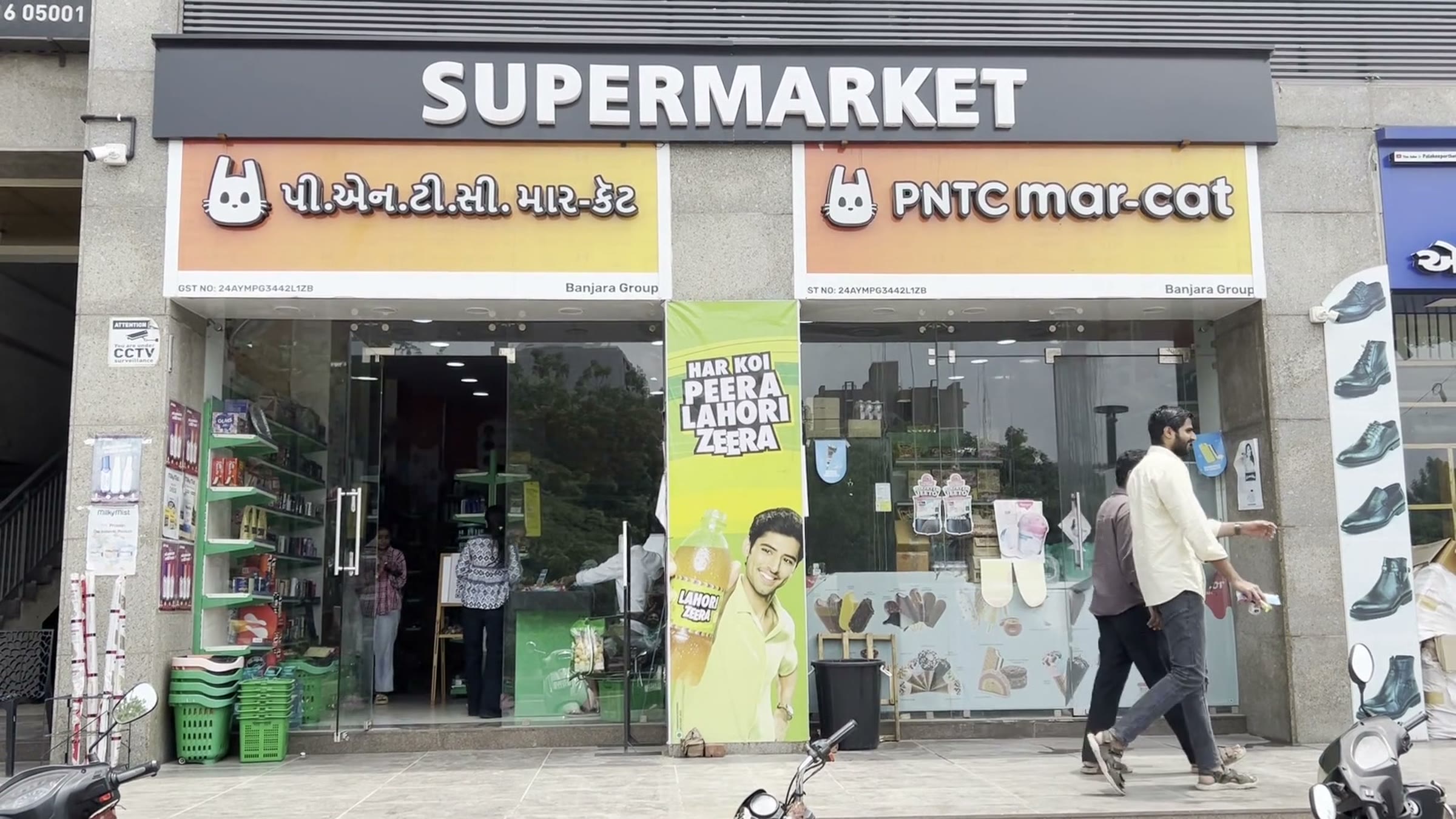
A supermarket in a corridor with organised retail on one side and ten-minute delivery on the other. We opened here on purpose. An easy location would have taught us less.
- Opened January 2025, pin code 380015, Ahmedabad.
- Within walking distance of DMart and Reliance SMART, and inside the delivery radius of Blinkit and Zepto.
- Independent, single location, running counters every day.
The operations
What we had to solve.
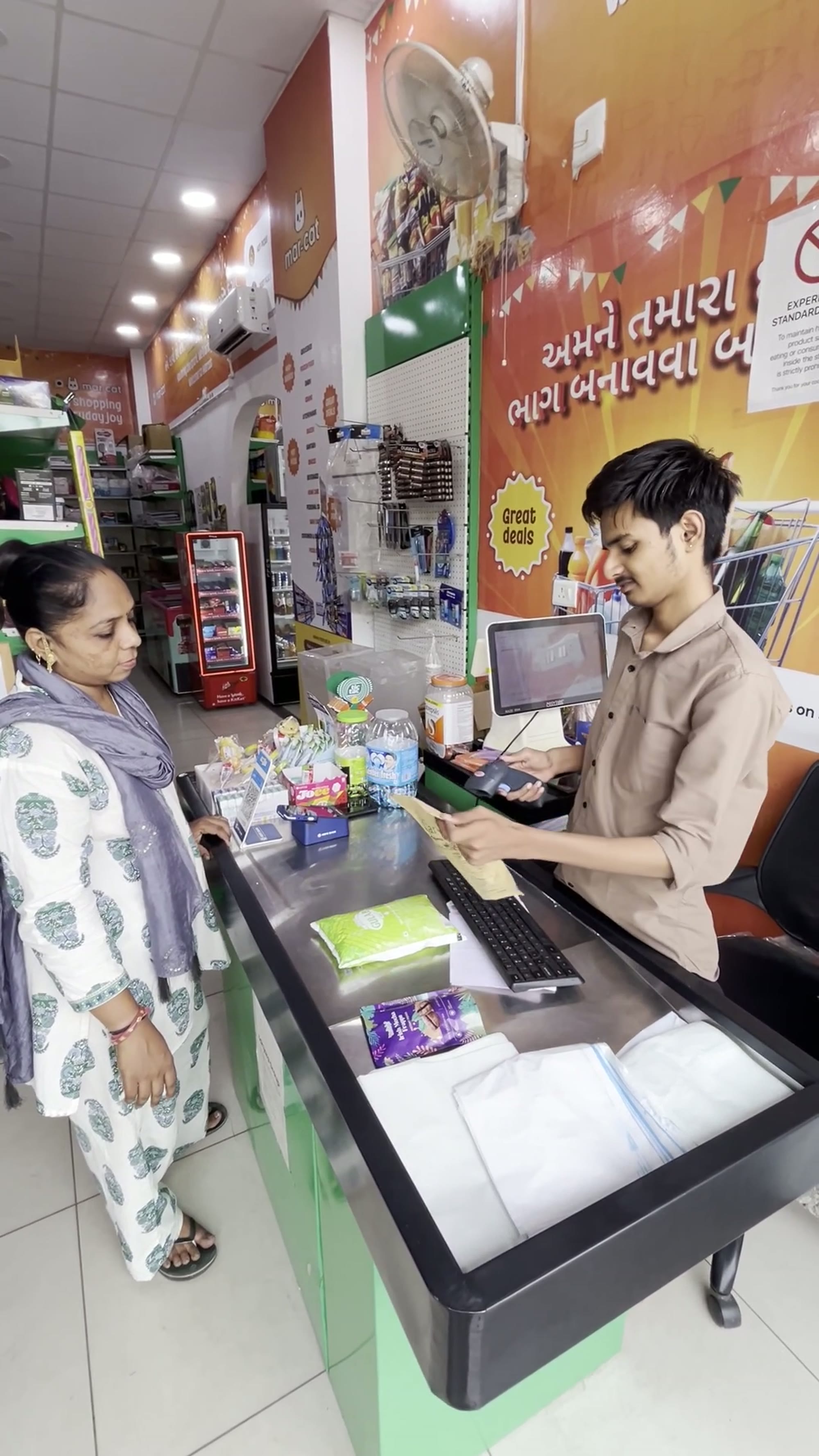
Not features. The ordinary mechanics of a day, which turn out to be where all the difficulty lives.
- Billing fast enough that a queue does not form at six in the evening.
- Knowing what to reorder before the shelf is empty rather than after.
- Reconciling what a supplier delivered against what the invoice claims.
- Keeping track of what a regular customer usually buys.
- Finding out which lines quietly stopped moving weeks ago.
The patterns
What kept repeating.
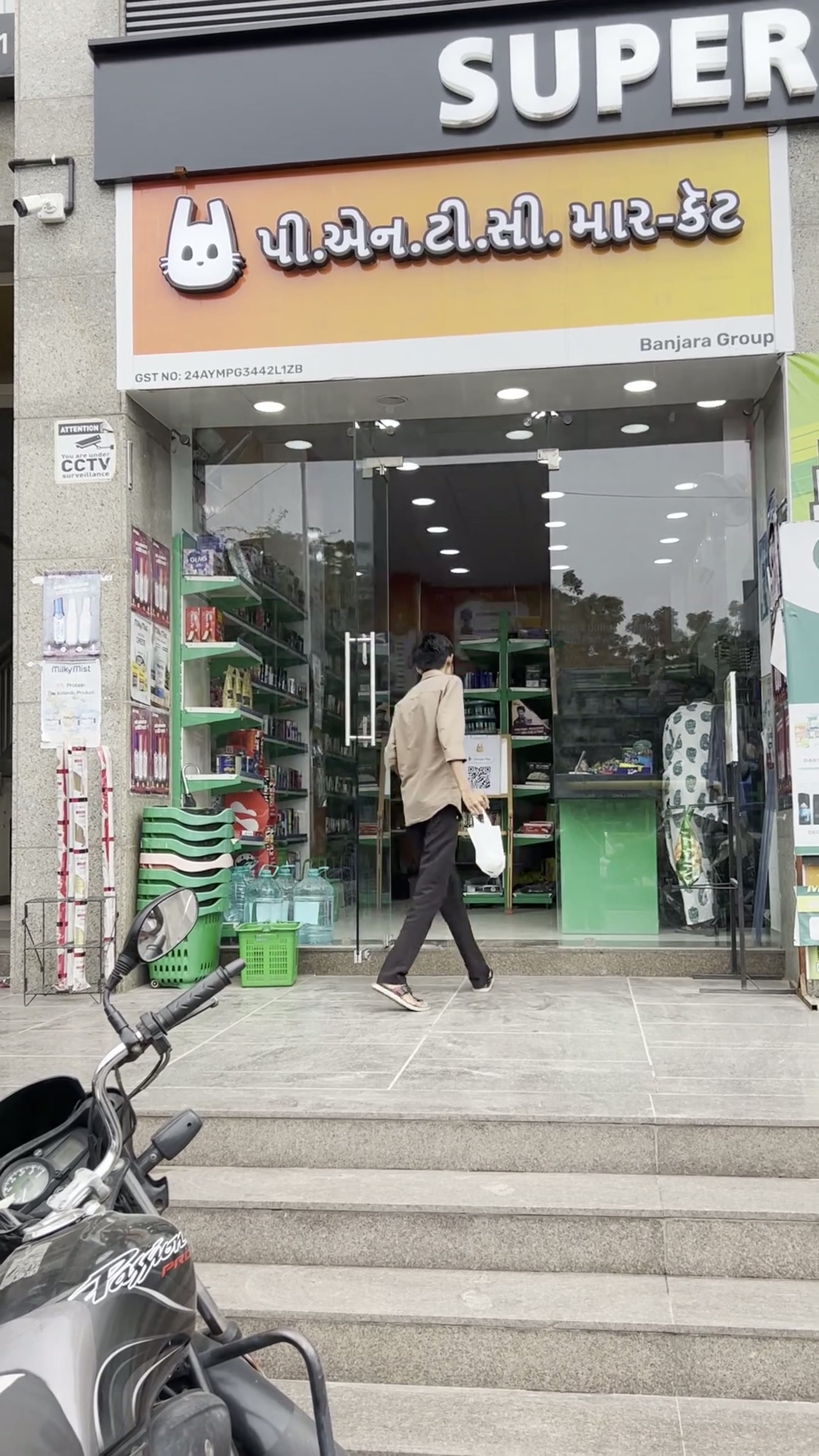
The same shapes, week after week, until they stopped looking like incidents and started looking like structure.
- The information needed to make a decision existed, somewhere else, held by someone else.
- Work was repeated because nothing carried forward between the people doing it.
- Nobody upstream knew what had actually sold until long after it mattered.
- Every participant was working hard, and the effort did not compound.
The realisation
What those patterns told us.
We had assumed the problem was that retailers lacked tools. Operating a store for a year told us something else.
- Retail does not lack effort. It lacks connection.
- The retailer, the distributor, the supplier and the brand are all working from a partial view of the same events.
- Software that only helps the store operate leaves the larger problem untouched.
- But nothing connects until the store itself is running on something.
The system
What we are building because of it.
The order matters. The store first, because that is where the information is created and where the relief is felt. Connection second, because it only becomes possible once the store is running.
- An operating layer the retailer actually wants to use every day.
- Then the connections outward, to the businesses the store already works with.
- Then whatever coordination becomes possible once those connections exist.
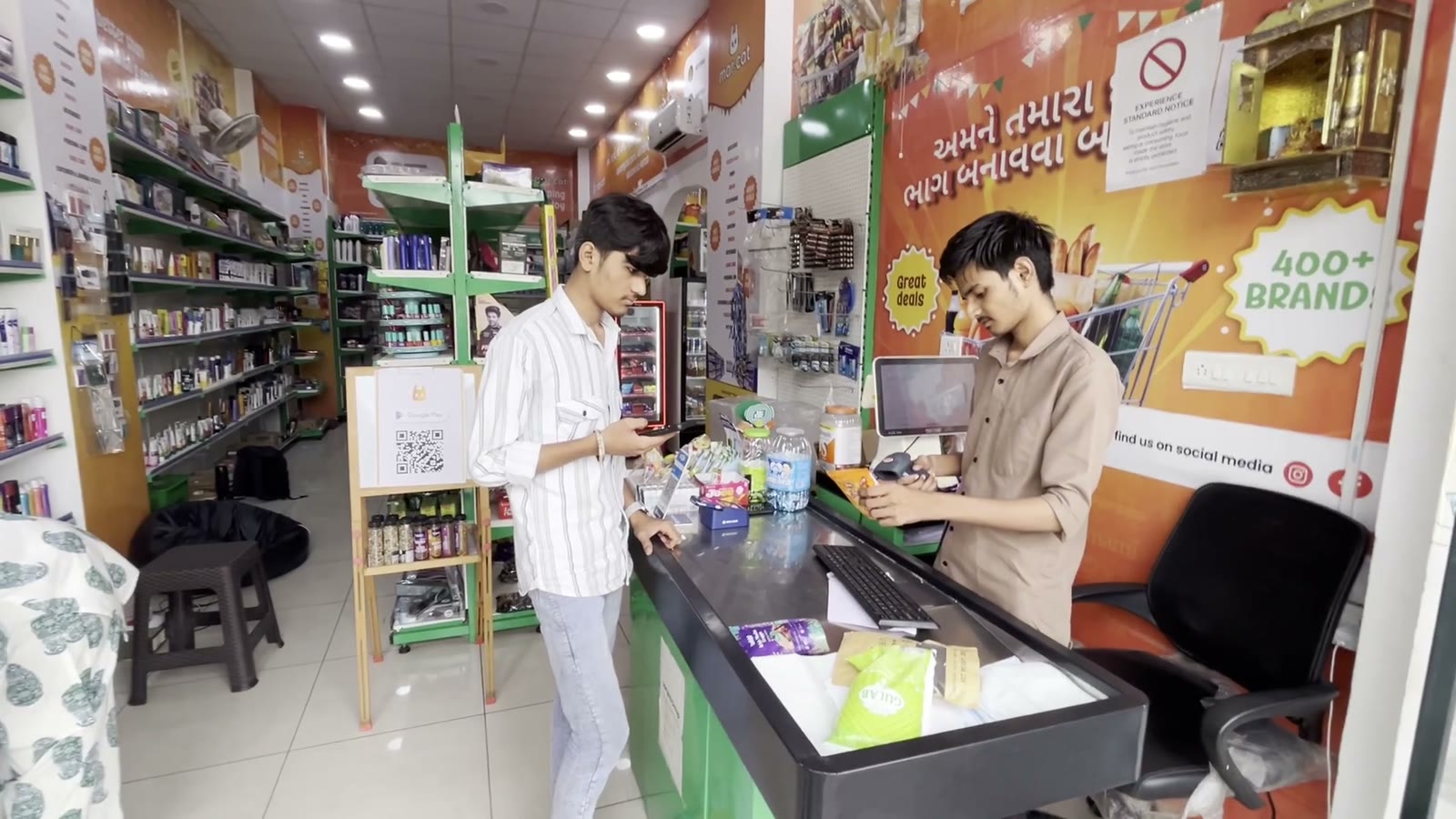
Every shortcut in the product exists because we needed it during a billing rush.